
Imperiled Mothers of All Suits & Sorts
by Quendrith Johnson, Los Angeles Correspondent
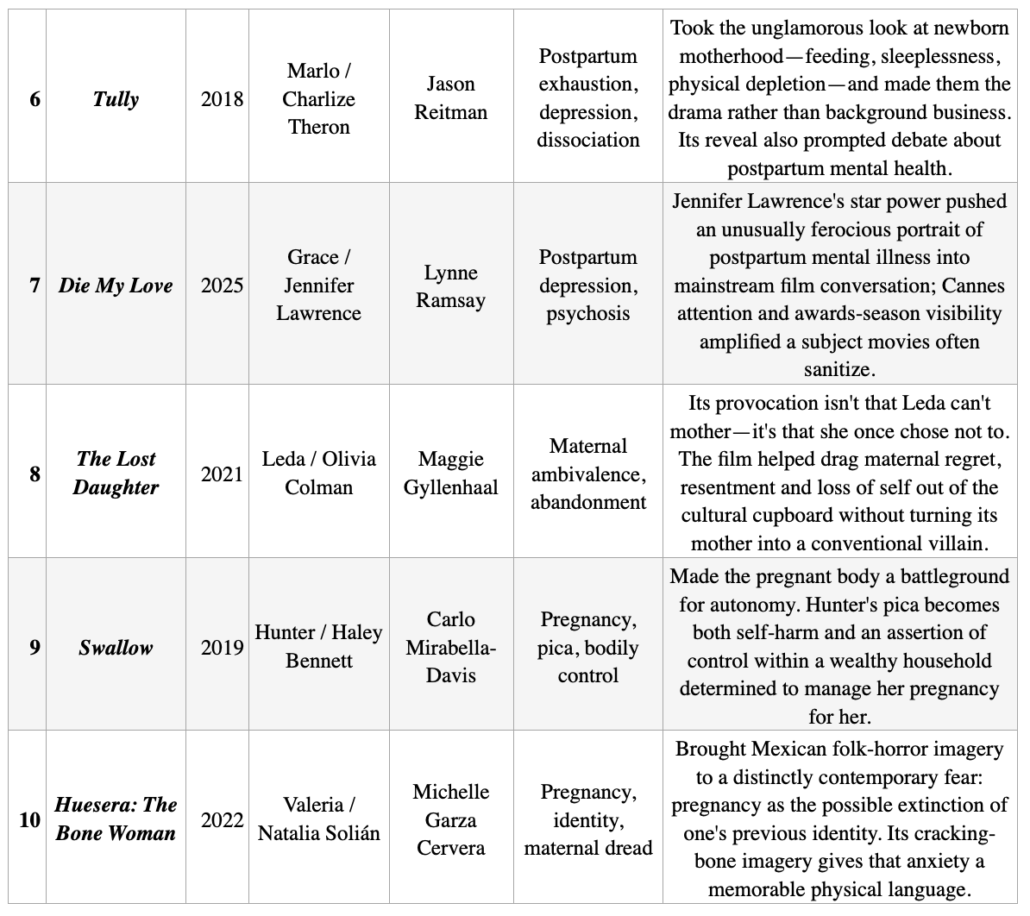
With the Lindsay Clancy triple-child murder trial in Plymouth, Massachusetts, deadlocked — and the judge allowing the defense just one hour to seek an emergency stay before declaring a mistrial — we rushed to press with The Top 10 Mothers in Peril Movies for a look at how frighteningly complicated motherhood can be beneath the familiar trope of babies, bassinets and joy.
In Rosemary’s Baby, pregnancy turned to justified paranoia and loss of maternal control. We Need to Talk About Kevin confronted real terror: a mother who fears her own child. The Babadook made grief, exhaustion, and maternal roiling rage into a monster. Tully entered the insomnia terrain, complete with a depleted postpartum brain. The Lost Daughter tackled the real and stunning taboo of maternal ambivalence. The scary title of Die My Love itself put postpartum mental illness in the eye of the frame.
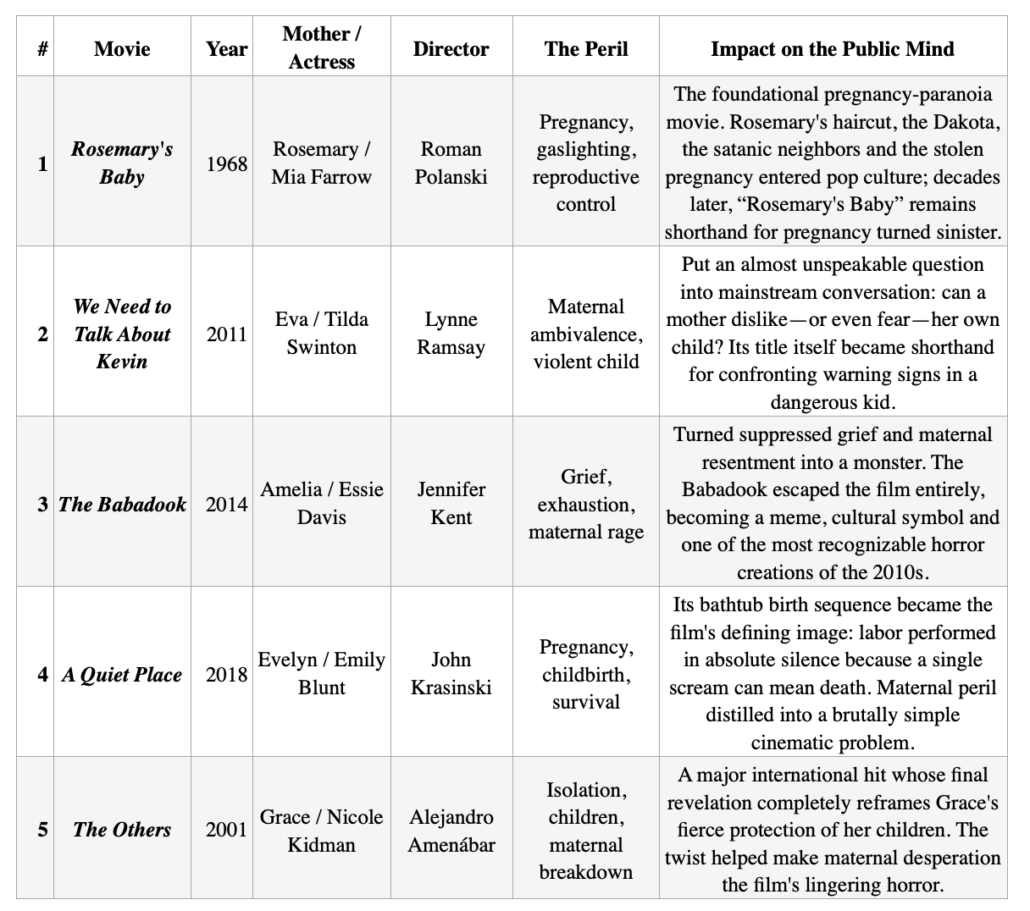
Clancy’s defense maintains that she suffered from postpartum psychosis when she unalived her three children in 2023, while prosecutors contend she planned it all along… however paralyzing herself belies that hypothesis for many mothers. This case has forced all of us to take a hard stare at the agonizing questions surrounding birth and death. Further made each one draw their own lines in the sand, or in stone as with the 12th hung juror who bucks an 11 to 1 verdict, about where devastating maternal mental illness begins and where criminal responsibility encroaches.
But thankfully, most pregnancies and postpartum periods do not end in psychiatric crisis or filicide, the formal name for a parent taking the life of their child. Postpartum psychosis affects an estimated 1 to 2 mothers per 1,000 births or 0.1% to 0.2%, but with millions of U.S. births each year, this still means thousands of women are affected.
Movies give maternal peril an ending; whereas real families don’t get that grace. When the unimaginable happens, we mourn the children, The Clancy Three now, plus the extended families, as well as the human cost of what can go terribly wrong during one of life’s most exhilarating yet fraught transitions.
Yet help exists; The National Maternal Mental Health Hotline offers free, confidential, 24/7 counseling at 1-833-TLC-MAMA (1-833-852-6262). They connect mothers and families to local resources or via telehealth care. Postpartum Support International, aptly named, provides support groups, even provider referrals to anyone in immediate crisis, by a text 988.
Most mothers and babies come through pregnancy and postpartum safely; some don’t. When the unimaginable happens, the other surviving children, crushed mothers and devastated families deserve more than a judgment: they deserve our compassionate attention. And access to help before a crisis becomes a tragedy, or in the aftermath.

And we can all pray for the former Lindsay Marie Musgrove, a registered labor and delivery nurse who turned 36 on August 11th, and never imagined what it would mean to become Lindsay Clancy, mother of three, now wheel-chair dependent Defendant, paralyzed from the waist down, in her own highly publicized, incredibly intimate, personal private tragedy.
(Now a mistrial… and an appeal to come.)
# # #
About The Author